
Bible Reading Plan for Beginners: 10 Simple Ways to Read the Bible Without Feeling Overwhelmed

Starting the Bible can feel surprisingly difficult.
You open the book, see dozens of books, hundreds of chapters, unfamiliar names, different writing styles, and suddenly the simple goal of “I want to read the Bible” feels much bigger than expected.
The good news? You don't have to read everything at once.
A good bible reading plan for beginners should do more than tell you which chapter to read each day. It should help you know where to begin, what to look for, how much to read, and what to do when you miss a day.
Here are 10 practical approaches you can use to create a Bible reading routine that actually fits your life.
1. Start With a “Small Enough to Finish” Bible Reading Plan

One of the biggest beginner mistakes is starting with an enormous goal.
Reading five chapters every morning may sound impressive, but if your schedule is already busy, you may quit after a week.
Instead, begin with 10–15 minutes a day.
Try this simple pattern:
- Read one chapter.
- Write down one verse that catches your attention.
- Ask one question about what you read.
- Pray for one minute about it.
That's it.
You don't need an hour-long quiet time for your Bible reading to matter. Consistency is more useful than creating a perfect routine that you cannot maintain.
Your beginner formula
1 chapter + 1 verse + 1 question + 1 prayer
Repeat that for 30 days.
After a month, you can decide whether you want to increase your reading.
2. Don't Start at Genesis Just Because It's the First Book

Genesis is important, but it isn't necessarily the easiest starting point for someone completely new to Scripture.
A beginner-friendly route can start with the Gospel of John.
John introduces you to Jesus while keeping the reading manageable. After John, you could continue with another Gospel, such as Mark, and then move into Acts.
One possible beginner pathway is:
John → Mark → Acts → Ephesians → Philippians → James → Genesis
Why does this work?
You first become familiar with Jesus' life and teachings. Then Acts shows what happened after His resurrection and how the early church developed. Shorter New Testament books give you opportunities to practice understanding different types of biblical writing before tackling longer sections.
There isn't only one correct starting point. The important thing is choosing a path that gives you enough context to keep going.
3. Try a Chronological Bible Reading Plan

The Bible isn't arranged as a single chronological story from beginning to end.
Some books overlap historically, particularly books describing Israel's kings, prophets, and the early church.
That's why a chronological bible reading plan can be fascinating.
Instead of simply following the order of the Bible, chronological reading attempts to place biblical events in their historical sequence.
For example, you might read portions of:
1 Samuel → Psalms → 2 Samuel → additional Psalms → 1 Kings → Proverbs
This can help you understand why certain events happened when they did.
Imagine reading a Psalm traditionally associated with David's life while also reading about the circumstances surrounding that period. Suddenly, the Psalm can feel less like an isolated poem and more like part of a larger story.
A simple way to build your own
- Choose a chronological Bible or reliable chronological reading guide.
- Decide how many minutes you can realistically read each day.
- Follow the assigned passages.
- Keep a timeline in your notebook.
- Write down important people and events as they appear.
Don't worry about memorizing every date.
Focus on seeing how the biblical story connects.
4. Build a Daily Bible Reading Plan Around Your Real Schedule

A daily bible reading plan doesn't have to mean reading at exactly 6:00 a.m. every morning.
Choose a consistent anchor instead.
For example:
- After your morning coffee
- Before checking social media
- During lunch
- After putting the children to bed
- Before going to sleep
The trick is connecting Bible reading to something you already do.
Try the “anchor habit”
Existing habit: Make coffee
↓
New habit: Read one Bible chapter
↓
Response: Write one sentence in your journal
This removes the need to constantly decide when you're going to read.
Your schedule does the remembering for you.
5. Use the M'Cheyne Bible Reading Plan If You Want More Variety

The M'Cheyne Bible reading plan is a historic reading approach associated with Scottish minister Robert Murray M'Cheyne.
Unlike a simple one-book-at-a-time plan, it takes readers through multiple portions of Scripture.
That variety can appeal to people who become bored when reading through one long book.
However, beginners should know that traditional versions can involve a substantial amount of daily reading.
If that feels overwhelming, modify it.
For example:
Instead of completing every assigned reading:
Choose one or two passages from the day's readings.
You can still benefit from the structure without turning Bible reading into a race.
Remember: a reading plan is a tool. You are not failing the plan if you need to adjust it.
6. Explore the Navigators Bible Reading Plan

Another approach worth exploring is the Navigators Bible reading plan.
The Navigators are known for discipleship and Scripture-focused resources, and their Bible reading approaches emphasize developing a sustainable habit rather than simply checking chapters off a list.
For beginners, the bigger lesson is useful:
Don't measure Bible reading only by quantity.
After reading a passage, stop and think.
Ask:
- What does this passage say about God?
- What does it reveal about people?
- Is there a command to follow?
- Is there something I need to trust?
- Is there something I don't understand yet?
Those questions turn reading into Bible study.
And that's often where deeper understanding begins.
7. Create Your Own “Bible Reading Plan to Understand the Bible”

If your biggest goal isn't finishing the Bible quickly but actually understanding it, create a slower plan.
Before reading each book, spend five minutes learning:
Who wrote it?
Who was it written to?
Why was it written?
What was happening historically?
What type of writing is it?
Then read.
For example, before reading Philippians, you might learn that Paul wrote the letter while imprisoned and that it was addressed to believers in Philippi.
That background gives the letter more context.
Use the 3-layer method
Layer 1 — Read:
What does the passage actually say?
Layer 2 — Understand:
What did it mean in its original context?
Layer 3 — Apply:
How should this truth affect my life?
Don't jump directly to application.
Understanding comes first.
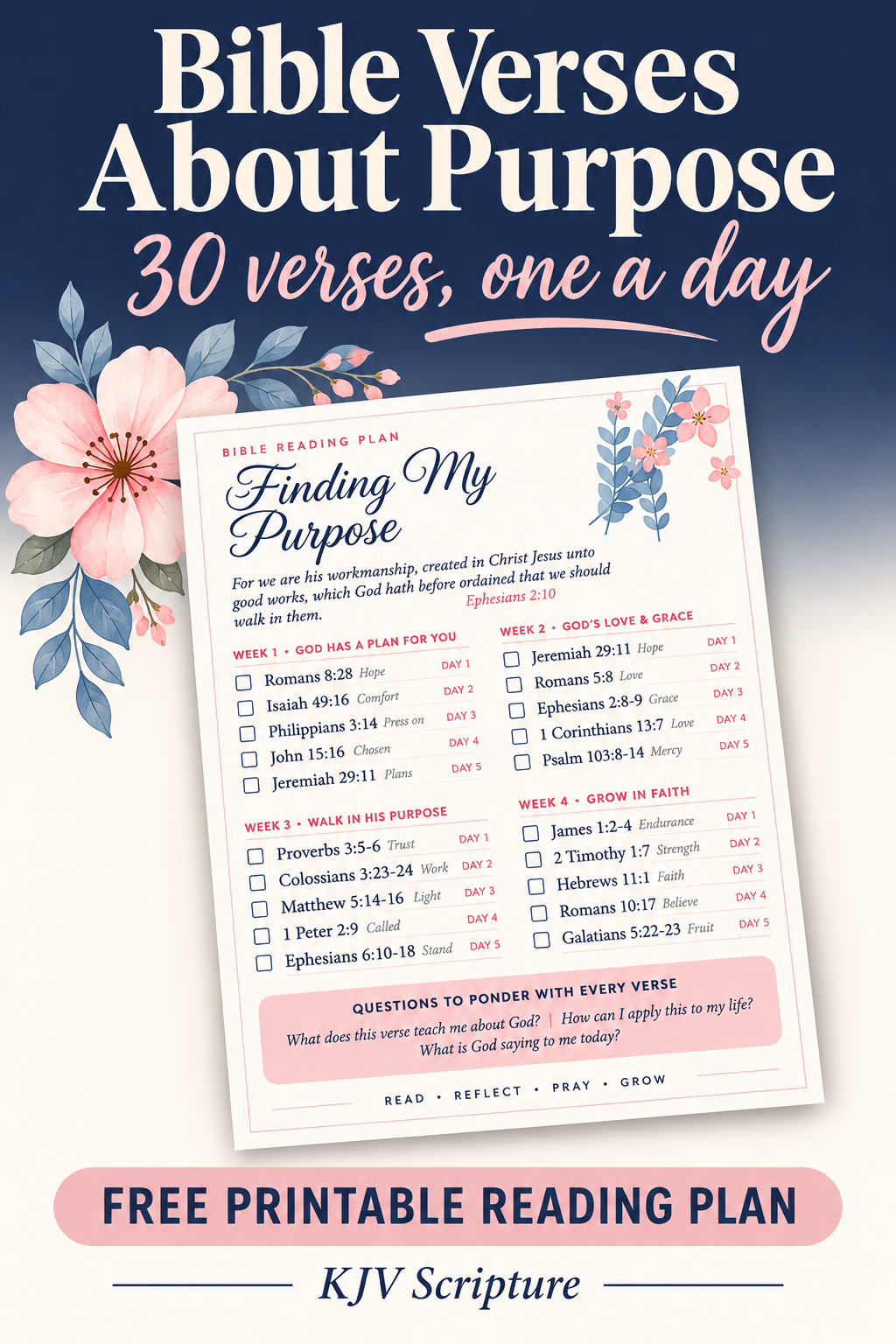
8. Make a 365-Day Bible Reading Plan Printable

If you enjoy having something physical to check off, a 365 day bible reading plan printable can make the process feel tangible.
But don't create a complicated spreadsheet with dozens of tiny boxes.
Make it simple.
Your printable can contain four columns:
| Day | Scripture | Completed | One Thought |
|---|---|---|---|
| 1 | John 1 | □ | ______ |
| 2 | John 2 | □ | ______ |
| 3 | John 3 | □ | ______ |
Leave enough space for a sentence.
At the end of every week, add one reflection:
“What is one thing I learned about God this week?”
This tiny addition turns a checklist into a spiritual reflection tool.
9. Have a “Missed Day” Rule Before You Begin

Here's something most reading plans don't emphasize enough:
You will probably miss a day.
And that's okay.
The problem isn't missing Tuesday.
The problem is thinking:
“I missed Tuesday, so I've ruined my plan.”
Then Wednesday becomes Thursday. Thursday becomes next week.
Instead, create your rule now:
Never restart because you missed a day. Simply continue.
If you miss three days, don't attempt to read four chapters to catch up.
Just return to today's reading.
Your goal isn't a perfect streak.
Your goal is developing a lasting relationship with Scripture.
10. Give Every Reading Session One “Treasure” to Take With You

Here's the twist that can make a basic bible reading plan for beginners much more meaningful.
Don't finish every session by simply checking a box.
Instead, look for one treasure.
It could be:
- A verse you want to remember
- A truth about God's character
- A warning
- A promise
- A question
- A prayer
- Something you had never noticed before
Write it down.
Over time, your notebook becomes more than a reading log. It becomes a record of what you've discovered.
You might even create five symbols:
♡ Promise
★ Important truth
! Something surprising
? Question
→ Personal application
You don't need a complicated Bible study system.
You simply need to slow down enough to notice what you're reading.
Your Bible Reading Plan Doesn't Have to Be Perfect
The best Bible reading plan is not necessarily the one with the most chapters, the strictest schedule, or the fanciest printable.
It's the one you can return to tomorrow.
If you're completely new to Scripture, start small. Choose a book, establish a realistic daily rhythm, read for understanding, and give yourself permission to slow down.
You can eventually explore a chronological Bible reading plan, a traditional M'Cheyne Bible reading plan, the Navigators Bible reading plan, or build your own 365-day Bible reading plan printable.
But don't let the number of available plans become another reason not to start.
Open the Bible.
Read today's passage.
Write down one thing you noticed.
Then come back tomorrow.
 Reviewed by Path of the Heart
on
September 23, 2026
Rating:


No comments: