
Starting a Bible study routine can feel overwhelming, especially if you are not sure where to begin. The Bible contains 66 books, different literary styles, historical settings, poetry, prophecy, letters, and many important themes. The good news is that you do not need to be an expert to begin studying Scripture.
With a simple Bible study method, a notebook, and a few minutes of intentional time, you can learn how to understand Scripture, reflect on its meaning, and apply biblical principles to everyday life.
In this guide, we’ll explore Bible study methods for beginners, including the SOAP method, inductive Bible study, topical study, character study, and other simple approaches.
What Is a Bible Study Method?
A Bible study method is simply a structured way to read and understand Scripture.
Instead of opening the Bible randomly and reading without a plan, a study method gives you questions or steps to follow. This can help you slow down, notice important details, understand the context, and think about how Scripture applies to your life.
There is no single method that every Christian must use. Different methods can be helpful depending on your goals and experience.
For beginners, the most important thing is to choose a method that is simple enough to use consistently.
1. The SOAP Bible Study Method
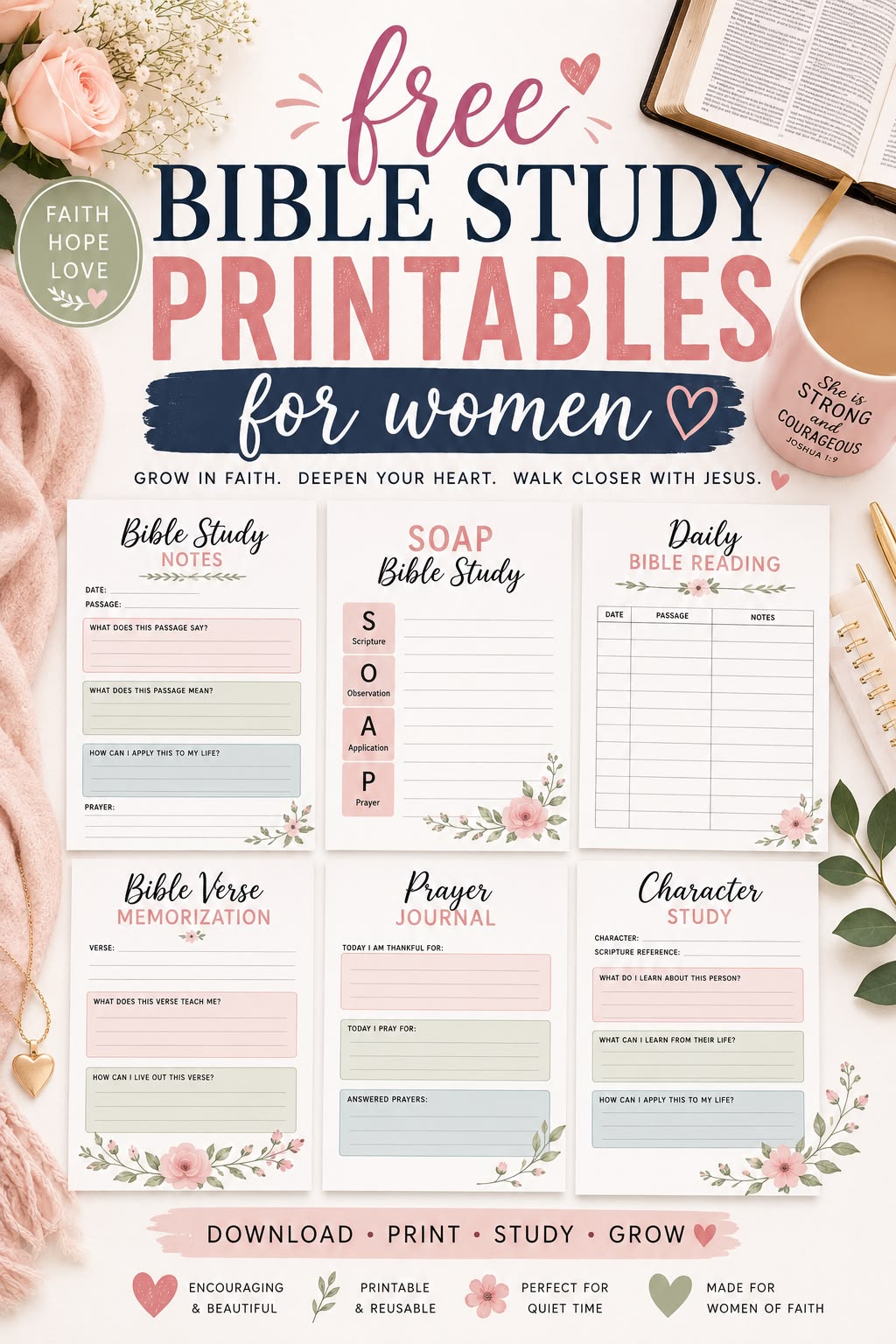
The SOAP method is one of the easiest Bible study methods for beginners.
SOAP stands for:
- S — Scripture
- O — Observation
- A — Application
- P — Prayer
Scripture
Choose a short passage and write down a verse or verses that stand out to you.
You might begin with a short section rather than an entire chapter. Writing the Scripture down can encourage you to slow down and pay attention to the words.
Observation
Ask yourself:
- What is happening in this passage?
- Who is speaking?
- Who is involved?
- What words or ideas are repeated?
- What stands out to me?
- Is there a command, promise, warning, or example?
Try to focus first on what the passage actually says.
Application
Think about how the passage relates to your life.
Ask:
- Is there something I need to believe?
- Is there something I need to change?
- Is there an action I should take?
- What does this passage teach me about God?
- How can I live out this truth?
Prayer
Finish by responding to God in prayer.
You can thank God for what you learned, ask for wisdom, confess something that needs to change, or ask for help applying what you studied.
Why SOAP works well for beginners: It provides a simple framework without requiring complicated study tools.
2. Inductive Bible Study Method

The inductive Bible study method focuses on moving from careful observation toward interpretation and application.
A simple version can be remembered as:
Observe → Interpret → Apply
Step 1: Observe
First, examine the passage carefully.
Look for:
- People
- Places
- Events
- Repeated words
- Commands
- Contrasts
- Questions
- Causes and effects
- Important themes
Don't immediately jump to what you think the passage means. Start by observing what is actually there.
Step 2: Interpret
Next, ask what the passage means.
Consider:
- What is the main message?
- What does the surrounding context tell me?
- Who was the original audience?
- Why was this written?
- How does this passage relate to the verses around it?
Context is particularly important because individual verses should not normally be interpreted in isolation.
Step 3: Apply
Finally, consider how the biblical teaching should affect your life.
Ask:
"What should I do with what I have learned?"
Application might involve your attitudes, choices, relationships, priorities, or actions.
3. The 5 W's Bible Study Method
If you are completely new to Bible study, the 5 W's method is an excellent place to start.
Ask:
Who?
Who is speaking?
Who is being addressed?
Who else is involved?
What?
What is happening?
What is being commanded, promised, explained, or described?
When?
When did this event or teaching occur?
Does the timing provide important context?
Where?
Where does the passage take place?
Does the location have significance?
Why?
Why was this written?
Why did the people act this way?
Why might the author have included this information?
You can also add How?
Ask how something happened or how the people involved responded.
This method encourages beginners to look at the passage from multiple perspectives before deciding what it means.
4. Topical Bible Study
A topical Bible study focuses on a particular subject found throughout Scripture.
For example, you might study:
- Faith
- Prayer
- Forgiveness
- Wisdom
- Anxiety
- Love
- Patience
- Gratitude
- Fear
- Trusting God
- Marriage
- Contentment
- Hope
Instead of studying one passage, you collect several relevant passages and compare what they teach about the topic.
How to Start a Topical Study
Choose one topic.
For example:
Prayer
Then find several passages related to prayer.
For each passage, record:
- The Scripture reference
- What the passage says about prayer
- What it teaches about God
- Any biblical principle
- How you can apply it
A topical study can help you see how a particular theme appears in different parts of the Bible.
5. Bible Character Study
Another beginner-friendly approach is a Bible character study.
Choose one person from Scripture and study their story.
You could study:
- Moses
- David
- Ruth
- Esther
- Daniel
- Peter
- Paul
- Mary
- Joseph
- Joshua
- Deborah
Start by finding the major passages that mention the person.
Then ask:
- What was this person's background?
- What challenges did they experience?
- What decisions did they make?
- How did they respond to God?
- What strengths did they demonstrate?
- What mistakes did they make?
- What happened because of their choices?
- What can I learn from their story?
A character study should remain grounded in what the biblical text actually records rather than assuming details that Scripture does not provide.
6. Chapter Study Method
If you want to develop a regular Bible reading habit, studying one chapter at a time can be a practical approach.
Start by reading the chapter once without taking notes.
Then read it again more slowly.
Write down:
Main Idea
What is the central message of this chapter?
Key Verses
Which verses seem especially important?
Important People
Who appears in the passage?
Important Events
What happens?
Repeated Words
Are certain words or ideas repeated?
Questions
What don't you understand yet?
Application
What principle can you put into practice?
You don't need to answer every question perfectly. The goal is to engage thoughtfully with the text.
How to Choose a Bible Study Method
If you are unsure which method to use, start with your goal.
| Your Goal | Method to Try |
|---|---|
| Simple daily Bible study | SOAP |
| Understand a passage deeply | Inductive Study |
| Explore a specific subject | Topical Study |
| Learn from someone's story | Character Study |
| Understand a passage systematically | 5 W's |
| Build a regular reading routine | Chapter Study |
You can also combine methods.
For example, you could read one chapter, use the 5 W's to understand the context, and then use SOAP to record your personal application and prayer.
What Beginners Need for Bible Study
You don't need a large collection of expensive resources to begin.
A simple setup can include:
1. A Bible
Use a translation you can understand while remaining attentive to the wording and context of the passage.
2. A Notebook or Bible Journal
Write down observations, questions, important verses, and applications.
3. A Pen or Highlighter
Mark repeated words, important ideas, questions, and connections.
4. A Quiet Place
A quiet environment can make it easier to concentrate.
5. A Consistent Time
You might study in the morning, during lunch, or before bed. The specific time matters less than developing a sustainable routine.
A Simple 20-Minute Bible Study Routine
If you are busy, you don't need an hour-long study session.
Try this simple routine:
Minutes 1–3: Pray
Ask God for wisdom and understanding as you read.
Minutes 4–8: Read
Read a short passage slowly.
Read it more than once if necessary.
Minutes 9–13: Observe
Write down what you notice.
Look for repeated words, commands, promises, people, events, and important ideas.
Minutes 14–17: Apply
Ask:
What does this Scripture teach me, and how can I respond?
Write down one practical application.
Minutes 18–20: Pray
Respond to what you learned through prayer.
This simple routine can turn Bible reading into a more intentional study practice.
Common Bible Study Mistakes Beginners Should Avoid
Learning how to study the Bible also means learning what to avoid.
Taking Verses Completely Out of Context
A verse can sometimes sound very different when separated from the surrounding passage.
Always read enough of the surrounding text to understand the context.
Trying to Study Too Much at Once
You don't have to study five chapters every day.
A short passage studied carefully can be more manageable than a large amount of Scripture read without reflection.
Focusing Only on Personal Feelings
Personal reflection can be valuable, but Bible study should begin with what the biblical text says.
Ask:
"What does this passage mean in its context?"
before asking:
"What does this mean to me?"
Expecting to Understand Everything Immediately
Some passages are difficult.
Write down your questions and continue studying. You can return to difficult passages later and use reliable study resources for additional context.
Bible Study Questions for Beginners
Save these questions for your next study session:
- What does this passage say?
- Who is involved?
- What is happening?
- What words or ideas are repeated?
- What is the main point?
- What does the surrounding context tell me?
- What does this passage reveal about God?
- Is there a command to follow?
- Is there a promise or warning?
- What can I learn from this passage?
- Is there something I need to change?
- How can I apply this truth today?
- What questions do I still have?
- How can I respond to God in prayer?
A Beginner's Bible Study Example
Suppose you decide to study Philippians 4:6–7.
Instead of simply reading the verses and moving on, you could use the SOAP method.
Scripture
Write down the portion of the passage that you want to focus on.
Observation
Notice the relationship between prayer, requests, thanksgiving, and God's peace.
Application
Consider how you respond when you are worried or facing uncertainty.
Prayer
Turn those concerns into a personal prayer.
The purpose isn't simply to finish the passage. The goal is to understand Scripture and respond thoughtfully to what you have learned.
Create Your Own Bible Study Routine
The best Bible study routine is one you can realistically maintain.
You could begin with:
Monday: SOAP Study
Tuesday: Chapter Study
Wednesday: Inductive Study
Thursday: Topical Study
Friday: Character Study
Saturday: Review your notes
Sunday: Reflect on what you learned
You don't have to follow this exact schedule. Use it as a starting point and adjust it to your own routine.
Final Thoughts
Learning Bible study methods for beginners doesn't have to be complicated.
Start small. Choose a short passage, ask thoughtful questions, write down what you notice, consider the context, and think about how Scripture should shape your daily life.
The SOAP method is a simple starting point, while inductive, topical, character, 5 W's, and chapter studies give you additional ways to explore Scripture as you grow.
Most importantly, don't worry about creating a perfect Bible study routine. Consistency, careful reading, prayer, and a willingness to learn can help you develop a meaningful habit of studying God's Word.
Start with one passage. Ask good questions. Write what you discover. Pray over what you learn. Then keep going.
 Reviewed by Path of the Heart
on
September 22, 2026
Rating:



No comments: